Advertisement
- United States
- /
- Software
- /
- NasdaqGS:MSFT
Microsoft (MSFT) Is Up 6.3% After AI-fueled Cloud Strength Lifts Q4 Results - What's Changed
SI

Reviewed by Sasha Jovanovic
- In late August 2026, Microsoft reported strong Q4 fiscal 2026 results, with Microsoft Cloud revenue up 27% year over year and Azure and other cloud services growing 43%, reflecting intensified demand for AI and cloud infrastructure alongside continued heavy capital investment.
- These results, including a commercial backlog reported at US$678 billion and more than 30 million paid Microsoft 365 Copilot seats, highlight how AI-driven workloads and long-term contracts are increasingly anchoring Microsoft’s earnings visibility and capacity expansion plans.
- We’ll now examine how this acceleration in AI-driven Azure demand and contracted cloud backlog could reshape Microsoft’s existing investment narrative.
The future of work is here. Discover the 38 top robotics and automation stocks leading the charge in AI-driven automation and industrial transformation.
Microsoft Investment Narrative Recap
To own Microsoft today, you have to believe its AI infused cloud franchise can keep turning large, long term contracts and Copilot adoption into durable, high quality earnings, even as data center and GPU spending remains intense. The latest results and AI wins reinforce the near term catalyst around Azure and Microsoft Cloud growth, while the biggest risk remains whether massive AI related CapEx and off balance sheet commitments can be serviced without eroding margins and free cash flow. The new announcements do not materially change that equation yet.
Among the recent news, Microsoft’s 50 MW AI compute deployment with ChronoScale in North America stands out as tightly linked to this catalyst. It shows how Microsoft is still adding high density, NVIDIA powered capacity to serve advanced AI training and inference workloads, directly tying into Azure’s growth story. At the same time, it illustrates the capital intensity and power and cooling complexity that sit at the heart of the margin and cash flow risk around its AI build out.
Yet beneath the strong AI momentum, investors should also be aware of how sustained high capital intensity and rising memory prices could...
Read the full narrative on Microsoft (it's free!)
Microsoft's narrative projects $510.7 billion revenue and $192.9 billion earnings by 2029. This requires 17.1% yearly revenue growth and about a $67.7 billion earnings increase from $125.2 billion today.
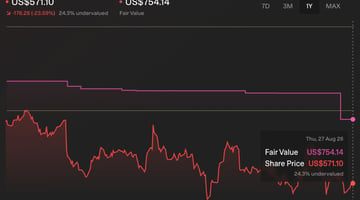
Uncover how Microsoft's forecasts yield a $561.39 fair value, a 9% upside to its current price.
Exploring Other Perspectives

Compared with the consensus view, the lowest analysts were far more cautious, assuming revenue of about US$496,000,000,000 and earnings of roughly US$200,400,000,000 by 2029, and warning that elevated AI data center CapEx could keep margins and free cash flow under pressure, even as deals like ChronoScale show how fast Microsoft is still building.
Explore 63 other fair value estimates on Microsoft - why the stock might be worth as much as 19% more than the current price!
Form Your Own Verdict
Disagree with existing narratives? Extraordinary investment returns rarely come from following the herd, so go with your instincts.
- A great starting point for your Microsoft research is our analysis highlighting 3 key rewards and 1 important warning sign that could impact your investment decision.
- Our free Microsoft research report provides a comprehensive fundamental analysis summarized in a single visual - the Snowflake - making it easy to evaluate Microsoft's overall financial health at a glance.
Want Some Alternatives?
Our top stock finds are flying under the radar-for now. Get in early:
- The best AI stocks today may lie beyond giants like Nvidia and Microsoft. Find the next big opportunity with these 18 smaller AI-focused companies with strong growth potential through early-stage innovation in machine learning, automation, and data intelligence that could fund your retirement.
- Uncover the next big thing with 22 elite penny stocks that balance risk and reward.
- We've uncovered the 12 dividend fortresses yielding 5%+ that don't just survive market storms, but thrive in them.
This article by Simply Wall St is general in nature. We provide commentary based on historical data and analyst forecasts only using an unbiased methodology and our articles are not intended to be financial advice. It does not constitute a recommendation to buy or sell any stock, and does not take account of your objectives, or your financial situation. We aim to bring you long-term focused analysis driven by fundamental data. Note that our analysis may not factor in the latest price-sensitive company announcements or qualitative material. Simply Wall St has no position in any stocks mentioned.
New: Manage All Your Stock Portfolios in One Place
We've created the ultimate portfolio companion for stock investors, and it's free.
• Connect an unlimited number of Portfolios and see your total in one currency
• Be alerted to new Warning Signs or Risks via email or mobile
• Track the Fair Value of your stocks
Have feedback on this article? Concerned about the content? Get in touch with us directly. Alternatively, email editorial-team@simplywallst.com
MI

The Foxhole
A landmark settlement is meant to punish Meta (META). If the 1998 tobacco deal is any guide, it might protect it.
149
ZO
zoe_vi5fn
Any moat with an opt-out clause for your competitors is just a fence around your own garden.
CO
connor_iwn1g
Worth looking at what previous legal action actually did to Meta rather than reaching for tobacco. The FTC's record five billion dollar privacy fine in 2019 was met with the stock rising, because it came in below fears and removed an open question. GDPR was designed to constrain large platforms and increased their share of the European ad market, because compliance cost fell hardest on small intermediaries. The FTC's antitrust case, the one that could genuinely have broken the company up, was decided in Meta's favour last November. The only thing that ever meaningfully hurt the business was Apple changing a tracking default, and Meta out-spent that too, while the ad-tech firms that could not afford to rebuild disappeared. The pattern is not that Meta survives regulation. It is that regulation keeps costing its smaller competitors more.
 Andrew Legget
Market Insights
Great earnings season, but are the earnings real?

At first glance, this was the strongest earnings season in years. But when you look at where the growth actually came from, the story splits into two very different pictures.
10
About NasdaqGS:MSFT
Microsoft
A technology company, develops and supports a portfolio of technology solutions for individuals and businesses worldwide.
Outstanding track record with flawless balance sheet and pays a dividend.
Similar Companies
Market Insights


Advertisement
Weekly Picks
LO


Lou_Basenese on Oncolytics Biotech ·
The Team Behind a $2 Billion Johnson & Johnson (JNJ) Deal Just Took Over This $105 Million Cancer Biotech
Fair Value:US$3.575.5% undervalued
28 followersusers have followed this narrative
0 commentsusers have commented on this narrative
7 likesusers have liked this narrative
TR


tripledub on Meta Platforms ·
The $135 Billion Bet That Should Make Every Shareholder Nervous
Fair Value:US$5861.4% undervalued
59 followersusers have followed this narrative
3 commentsusers have commented on this narrative
34 likesusers have liked this narrative
TA


Talos on Voyager Technologies ·
The "Landlord of Orbit" – A Deep Value Play Ahead of the Starlab Era
Fair Value:US$385.291.1% undervalued
63 followersusers have followed this narrative
0 commentsusers have commented on this narrative
6 likesusers have liked this narrative
IV

Ivoed on Uber Technologies ·
Uber’s Valuation Depends On Who Captures The Economics Of Driverless Rides
Fair Value:US$11632.1% undervalued
12 followersusers have followed this narrative
0 commentsusers have commented on this narrative
3 likesusers have liked this narrative
Recently Updated Narratives
DA

dang on Resonance Health ·
Resonance Health will triple revenue growth to 30.83% in five years
Fair Value:AU$0.08331.3% undervalued
1 followerusers have followed this narrative
0 commentsusers have commented on this narrative
0 likesusers have liked this narrative
RO


RockeTeller on Santacruz Silver Mining ·
Santacruz Silver, 5.6M Oz Silver Producer Trading at Low Multiples, 100X Per-Share Upside in $200 Silver
Fair Value:CA$142.990.7% undervalued
96 followersusers have followed this narrative
14 commentsusers have commented on this narrative
0 likesusers have liked this narrative
CO


composite32 on Eaton ·
"Grid-to-Chip: How Eaton Controls the Physical Bottlenecks of AI Data Centers"
Fair Value:US$517.0622.1% undervalued
1 followerusers have followed this narrative
0 commentsusers have commented on this narrative
0 likesusers have liked this narrative
Popular Narratives
OS


oscargarcia on NVIDIA ·
The company that went from selling GPUs to gamers to becoming the AI arms dealer of the 21st century.
Fair Value:US$28022.3% undervalued
364 followersusers have followed this narrative
9 commentsusers have commented on this narrative
16 likesusers have liked this narrative
CU

CubanEros on Microsoft ·
A wonderful business at reasonable price.
Fair Value:US$419.9122.3% overvalued
213 followersusers have followed this narrative
0 commentsusers have commented on this narrative
9 likesusers have liked this narrative
KI

KiwiInvest on Amazon.com ·
Amazon's high growth, high tech segments propel its profits, while traditional segments plod along
Fair Value:US$475.0943.9% undervalued
240 followersusers have followed this narrative
1 commentusers have commented on this narrative
8 likesusers have liked this narrative


