Advertisement
- United States
- /
- Software
- /
- NasdaqGS:MSFT
Microsoft Stock And 2 AI Infrastructure Picks For Data Center Growth
SI

Reviewed by Sasha Jovanovic
With oil prices easing and inflation expectations calming, investors are getting a brief window where interest rate worries feel less dominant and long term themes like artificial intelligence regain the spotlight. That is where the AI Stocks screener comes in, filtering companies tied to chips, cloud and AI software. This article highlights three stocks from the screener that show how different parts of the AI story fit together.
The three AI stocks covered below are just a sample, and the full screen surfaced another 204 companies with equally compelling ChatGPT and broader artificial intelligence narratives that are not covered in this article. To identify and analyze the opportunities that best fit your own view of the AI trend, go straight to the Artificial Intelligence/ AI Stocks screener.
Microsoft (MSFT)
Overview: Microsoft is a global technology company best known for its Windows operating system, Office and Microsoft 365 productivity software, and Azure cloud platform, which now also delivers Azure OpenAI and Microsoft 365 Copilot services that plug enterprises directly into large language models and AI copilots. Beyond software and cloud, it is also active in gaming through Xbox, devices like Surface, and professional networking via LinkedIn.
Operations: Microsoft generates most of its revenue from Productivity and Business Processes at about US$140b and Intelligent Cloud at about US$138b, with a smaller contribution of about US$54b from More Personal Computing. Its sales are fairly balanced between the United States at about US$171b and other countries at about US$161b.
Market Cap: US$3.7t
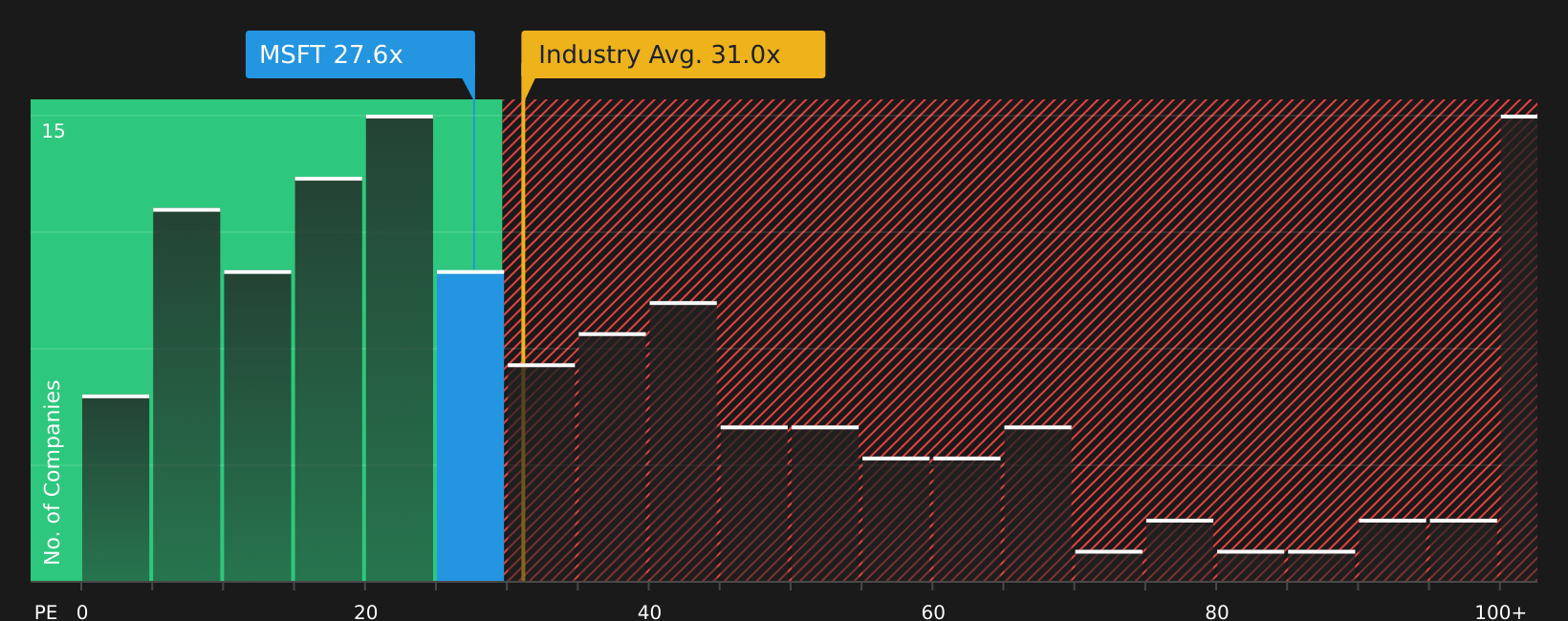
Investors looking at AI may focus on how Microsoft turns its Azure OpenAI Service, Azure AI infrastructure and Microsoft 365 Copilot into everyday tools for companies that already rely on its software. The business combines large net margins and significant free cash flow generation with heavy data center and in-house AI chip spending aimed at supporting Copilot and GPT class workloads. This raises questions about how quickly that investment may pay off. In parallel, regulators in the US, UK and Europe are examining whether Microsoft is using its software position to steer customers into Azure, which could affect parts of the business model. Overall, this is a financially powerful AI platform with regulatory and capital allocation risks that some investors may view as important considerations.
Microsoft’s AI push is accelerating, supported by Azure and Copilot. The real story is how this development affects cash generation and regulation risk. Get the full picture in the analysis report for Microsoft
Oracle (ORCL)
Overview: Oracle is a global enterprise software and cloud company best known for Oracle Cloud Infrastructure and a large suite of business applications that run finance, HR, supply chains and industry specific workflows. Its strongest link to the AI and ChatGPT theme is OCI and its generative AI services, which host and run large language models and AI agents for enterprises, while Oracle Autonomous Database and embedded AI tools help customers apply those models to their own data.
Operations: Oracle generates the bulk of its revenue from Cloud and software at about US$58.5b, with smaller contributions from Services at about US$5.7b and Hardware at about US$3.1b, and it earns roughly US$39.8b in the United States and about US$26.5b across Japan, Germany, the United Kingdom and other countries.
Market Cap: US$417.0b
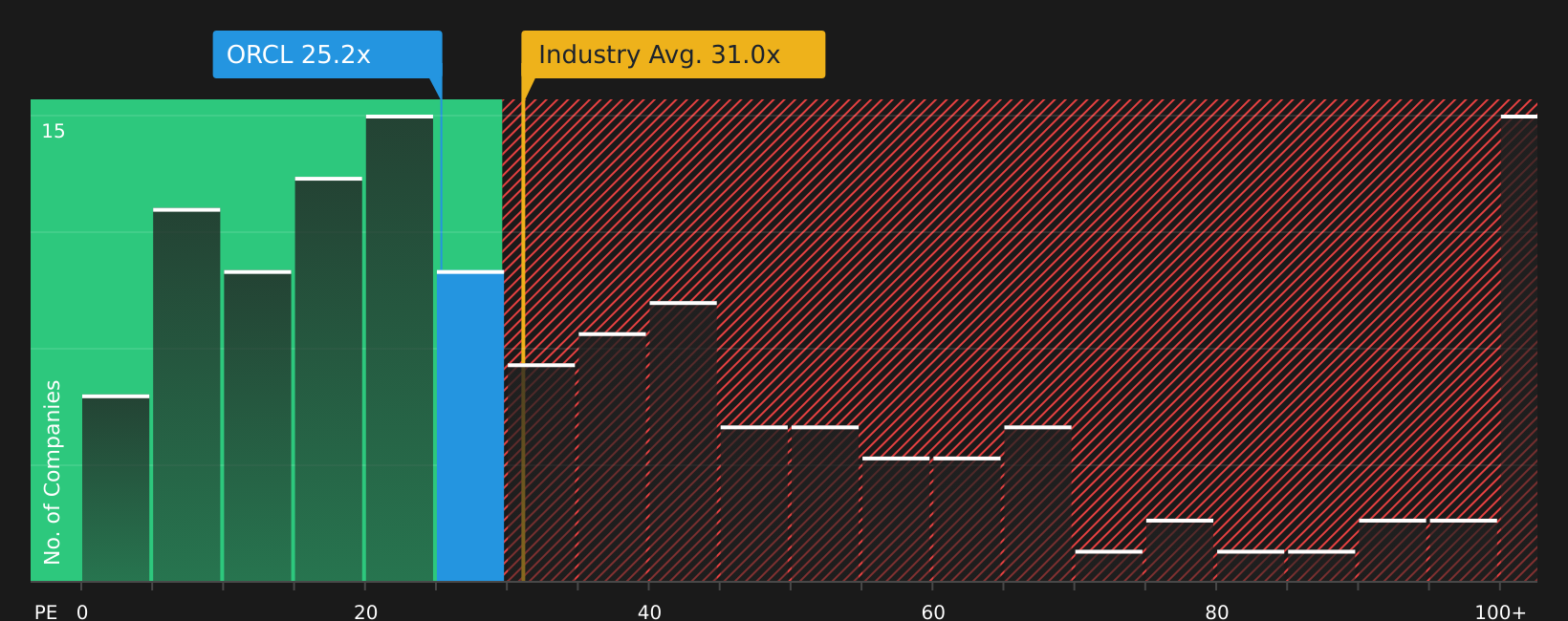
Oracle gives you direct exposure to the AI infrastructure buildout through OCI and its generative AI services, which support demanding workloads such as large language models and enterprise AI agents. The company reports very large AI related contract backlogs and strong earnings and revenue growth forecasts, yet the stock trades on a P/E that is lower than many US software peers, which some investors interpret as a potential value signal. The flip side is heavy use of debt to fund gigawatt scale data centers, pressure on free cash flow and rising credit risk indicators. If Oracle can turn its AI backlog into durable cash generation, the current mix of growth potential, valuation and financing risk could change materially.
Oracle’s AI backlog and lower P/E hint that investors may be missing how its cloud story and financing risk are pulling apart. See how that tension shows up in the 4 key rewards and 3 important warning signs (1 is major!)
Alphabet (GOOGL)
Overview: Alphabet is the parent company behind Google Search, YouTube and Android. Its place in this AI Stocks screener comes from Google Cloud’s Vertex AI platform and Gemini large language models, which let enterprises build and run ChatGPT style applications on Google’s infrastructure. Around this, Alphabet still earns most of its money from advertising and consumer services, with AI now woven through search, YouTube and Workspace products.
Operations: Alphabet generates the bulk of its revenue from Google Services at about US$367.1b, with Google Cloud contributing about US$77.6b, Other Bets about US$1.5b, and the United States its largest region at about US$219.0b of reported sales.
Market Cap: US$4.2t
Alphabet is worth a close look if you want AI exposure that sits on top of a large advertising and cloud business. Google Cloud’s Vertex AI and Gemini models are central to enterprise AI spending, while custom TPUs and heavy data center investment are aimed at capturing rising demand for AI compute. At the same time, forecasts that earnings could decline slightly over the next few years and recent periods of negative free cash flow tied to AI capex show how capital intensive this push has become. Layer on regulatory pressure in the US and Europe, and the question for investors is whether today’s AI buildout translates into durable cash returns tomorrow.
Alphabet’s AI push is accelerating while heavy data center spending raises fresh questions about future cash returns. See how that trade off looks when you line up the analyst forecasts for Alphabet and what the market might be missing

Seeking Alternatives Before The Crowd Moves
Fresh stock stories can move from under the radar to full momentum quickly. Use curated lists to spot potential breakouts before the crowd catches on and act now.
- Spot income opportunities that aim to keep paying while others are still looking for yield by scanning our curated 11 dividend fortresses.
- Track potential growth stories with strong finances before they get widely noticed by working through a hand picked 20 high quality undiscovered gems.
- Ride long term infrastructure themes that could gain fresh attention as energy grids are upgraded using a targeted 38 power grid technology and infrastructure stocks.
This article by Simply Wall St is general in nature. We provide commentary based on historical data and analyst forecasts only using an unbiased methodology and our articles are not intended to be financial advice. It does not constitute a recommendation to buy or sell any stock, and does not take account of your objectives, or your financial situation. We aim to bring you long-term focused analysis driven by fundamental data. Note that our analysis may not factor in the latest price-sensitive company announcements or qualitative material. Simply Wall St has no position in any stocks mentioned.
New: Manage All Your Stock Portfolios in One Place
We've created the ultimate portfolio companion for stock investors, and it's free.
• Connect an unlimited number of Portfolios and see your total in one currency
• Be alerted to new Warning Signs or Risks via email or mobile
• Track the Fair Value of your stocks
Have feedback on this article? Concerned about the content? Get in touch with us directly. Alternatively, email editorial-team@simplywallst.com
MI

The Foxhole
Nvidia's (NVDA) record profit had a US$7.8 billion catch. That chunk came from betting on its own customers, not from selling its chips.
96
JA

Jake_Merritt
The circularity worth examining is not the mark-to-market line. A large and growing share of Nvidia's revenue comes from companies funded by venture capital, and Nvidia participates in some of those rounds. That is the loop. The paper gains are just an accounting reflection of it, so focusing on them means arguing about the mirror rather than the room.
NA
nadia_y3d8i
Hyperscalers grew 13% sequentially, the other AI segment grew 25% and 138% year on year. The faster half is the funded half. AI venture funding was over 400 billion in the first half with about 70% spent on compute. That is an interesting composition shift like I mentioned yesterday.
 Mitchell Lawler
Market Insights
Which payment stocks actually get paid?

Every new payment app was supposed to kill Visa and Mastercard. Instead, they got bigger. So what does that mean for the payment stocks on your radar?
43
About NasdaqGS:MSFT
Microsoft
A technology company, develops and supports a portfolio of technology solutions for individuals and businesses worldwide.
Outstanding track record with flawless balance sheet and pays a dividend.
Similar Companies
Market Insights


Advertisement
Weekly Picks
RI


Rick_Orford on Starfighters Space ·
The 1960s Fighter Jet That Could Crack Open a $20 Billion Satellite Market
Fair Value:US$522.6% undervalued
72 followersusers have followed this narrative
4 commentsusers have commented on this narrative
11 likesusers have liked this narrative
TR


tripledub on Meta Platforms ·
The $135 Billion Bet That Should Make Every Shareholder Nervous
Fair Value:US$5861.7% undervalued
57 followersusers have followed this narrative
3 commentsusers have commented on this narrative
34 likesusers have liked this narrative
TA


Talos on Voyager Technologies ·
The "Landlord of Orbit" – A Deep Value Play Ahead of the Starlab Era
Fair Value:US$385.291.0% undervalued
52 followersusers have followed this narrative
0 commentsusers have commented on this narrative
5 likesusers have liked this narrative
IV

Ivoed on Uber Technologies ·
Uber’s Valuation Depends On Who Captures The Economics Of Driverless Rides
Fair Value:US$11632.3% undervalued
12 followersusers have followed this narrative
0 commentsusers have commented on this narrative
3 likesusers have liked this narrative
Recently Updated Narratives
LU


LunaRodas on Malibu Boats ·
MBUU | Malibu Boats: What They Said vs. What They Did
Fair Value:US$33.520.5% undervalued
1 followerusers have followed this narrative
0 commentsusers have commented on this narrative
0 likesusers have liked this narrative
KE

ketchup2121 on Lotus Technology ·
Lotus Technology Reports Unaudited Half Year 2026 Financial Results
Fair Value:US$2.5954.1% undervalued
1 followerusers have followed this narrative
3 commentsusers have commented on this narrative
0 likesusers have liked this narrative
JO


John_Eric on Liftoff Mobile ·
Liftoff Mobile: A Two-Month-Old Stock That Just Survived an Interrogation
Fair Value:US$75.3675.5% undervalued
1 followerusers have followed this narrative
0 commentsusers have commented on this narrative
0 likesusers have liked this narrative
Popular Narratives
OS


oscargarcia on NVIDIA ·
The company that went from selling GPUs to gamers to becoming the AI arms dealer of the 21st century.
Fair Value:US$28025.1% undervalued
364 followersusers have followed this narrative
9 commentsusers have commented on this narrative
16 likesusers have liked this narrative
CU

CubanEros on Microsoft ·
A wonderful business at reasonable price.
Fair Value:US$419.9118.2% overvalued
211 followersusers have followed this narrative
0 commentsusers have commented on this narrative
9 likesusers have liked this narrative
KI

KiwiInvest on Amazon.com ·
Amazon's high growth, high tech segments propel its profits, while traditional segments plod along
Fair Value:US$475.0945.2% undervalued
236 followersusers have followed this narrative
1 commentusers have commented on this narrative
8 likesusers have liked this narrative


