
Advertisement
- United Kingdom
- /
- Banks
- /
- LSE:STAN
Could The Standard Chartered PLC (LON:STAN) Ownership Structure Tell Us Something Useful?
Every investor in Standard Chartered PLC (LON:STAN) should be aware of the most powerful shareholder groups. Large companies usually have institutions as shareholders, and we usually see insiders owning shares in smaller companies. Companies that used to be publicly owned tend to have lower insider ownership.
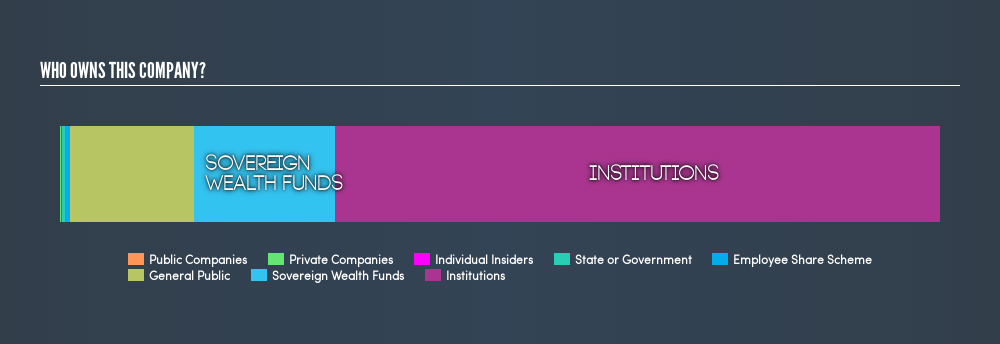
Standard Chartered is a pretty big company. It has a market capitalization of UK£20b. Normally institutions would own a significant portion of a company this size. Taking a look at our data on the ownership groups (below), it's seems that institutions are noticeable on the share registry. We can zoom in on the different ownership groups, to learn more about STAN.
View our latest analysis for Standard Chartered
What Does The Institutional Ownership Tell Us About Standard Chartered?
Institutional investors commonly compare their own returns to the returns of a commonly followed index. So they generally do consider buying larger companies that are included in the relevant benchmark index.
We can see that Standard Chartered does have institutional investors; and they hold 69% of the stock. This implies the analysts working for those institutions have looked at the stock and they like it. But just like anyone else, they could be wrong. When multiple institutions own a stock, there's always a risk that they are in a 'crowded trade'. When such a trade goes wrong, multiple parties may compete to sell stock fast. This risk is higher in a company without a history of growth. You can see Standard Chartered's historic earnings and revenue, below, but keep in mind there's always more to the story.
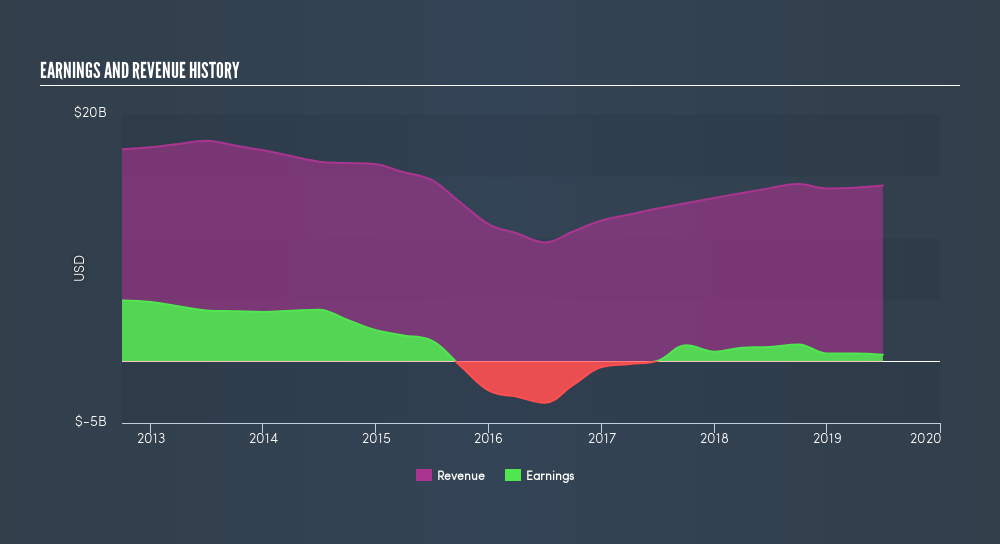
Investors should note that institutions actually own more than half the company, so they can collectively wield significant power. We note that hedge funds don't have a meaningful investment in Standard Chartered. Quite a few analysts cover the stock, so you could look into forecast growth quite easily.
Insider Ownership Of Standard Chartered
The definition of an insider can differ slightly between different countries, but members of the board of directors always count. Company management run the business, but the CEO will answer to the board, even if he or she is a member of it.
Most consider insider ownership a positive because it can indicate the board is well aligned with other shareholders. However, on some occasions too much power is concentrated within this group.
Our data suggests that insiders own under 1% of Standard Chartered PLC in their own names. Being so large, we would not expect insiders to own a large proportion of the stock. Collectively, they own UK£30m of stock. It is good to see board members owning shares, but it might be worth checking if those insiders have been buying.
General Public Ownership
With a 14% ownership, the general public have some degree of sway over STAN. While this group can't necessarily call the shots, it can certainly have a real influence on how the company is run.
Next Steps:
I find it very interesting to look at who exactly owns a company. But to truly gain insight, we need to consider other information, too.
Many find it useful to take an in depth look at how a company has performed in the past. You can access this detailed graph of past earnings, revenue and cash flow .
But ultimately it is the future, not the past, that will determine how well the owners of this business will do. Therefore we think it advisable to take a look at this free report showing whether analysts are predicting a brighter future.
NB: Figures in this article are calculated using data from the last twelve months, which refer to the 12-month period ending on the last date of the month the financial statement is dated. This may not be consistent with full year annual report figures.
We aim to bring you long-term focused research analysis driven by fundamental data. Note that our analysis may not factor in the latest price-sensitive company announcements or qualitative material.
If you spot an error that warrants correction, please contact the editor at editorial-team@simplywallst.com. This article by Simply Wall St is general in nature. It does not constitute a recommendation to buy or sell any stock, and does not take account of your objectives, or your financial situation. Simply Wall St has no position in the stocks mentioned. Thank you for reading.
About LSE:STAN
Standard Chartered
Provides various banking products and services in Asia, Africa, the Middle East, Europe, and the Americas.
Excellent balance sheet with acceptable track record.
Similar Companies
Market Insights



Advertisement
Weekly Picks
CE


Ceazar on Sparc AI ·
When GPS fails: this small cap is fixing a $54B drone problem
Fair Value:CA$5.2537.3% undervalued
140 followersusers have followed this narrative
0 commentsusers have commented on this narrative
26 likesusers have liked this narrative
HA


HarishPK on Amdocs ·
Why Amdocs is a high conviction Buy for me?
Fair Value:US$82.0330.9% undervalued
17 followersusers have followed this narrative
1 commentusers have commented on this narrative
4 likesusers have liked this narrative
IV

Ivoed on SBM Offshore ·
Why SBM Offshore’s €30 Share Price May Be Too Harsh On Its Backlog
Fair Value:€44.528.6% undervalued
9 followersusers have followed this narrative
0 commentsusers have commented on this narrative
3 likesusers have liked this narrative
CL


Clive_Thompson on Green Tea Group ·
One of China's Fastest-Growing Restaurant Chains Trades on Just 7x Earnings and an 8% Dividend
Fair Value:HK$8.726.1% undervalued
23 followersusers have followed this narrative
3 commentsusers have commented on this narrative
15 likesusers have liked this narrative
Recently Updated Narratives
ON

Ontological on Ryde Group ·
Ryde Group Ltd (NYSE American: RYDE): A High-Growth Challenger in Asia’s Digital Mobility and Quick Commerce
Fair Value:US$8.1789.9% undervalued
1 followerusers have followed this narrative
0 commentsusers have commented on this narrative
0 likesusers have liked this narrative
DR


DrPotato on Yum! Brands ·
Yum! Brands: A High-Quality Compounder With Continued Global Growth Potential
Fair Value:US$179.8317.9% undervalued
1 followerusers have followed this narrative
0 commentsusers have commented on this narrative
0 likesusers have liked this narrative
TR


tripledub on EDU Holdings ·
The Tiny Australian School Stock That Bought Back a Quarter of Itself While Nobody Was Looking
Fair Value:AU$1.7732.8% undervalued
6 followersusers have followed this narrative
0 commentsusers have commented on this narrative
0 likesusers have liked this narrative
Popular Narratives
OS


oscargarcia on NVIDIA ·
The company that went from selling GPUs to gamers to becoming the AI arms dealer of the 21st century.
Fair Value:US$28024.3% undervalued
249 followersusers have followed this narrative
9 commentsusers have commented on this narrative
16 likesusers have liked this narrative
CU

CubanEros on Microsoft ·
A wonderful business at reasonable price.
Fair Value:US$419.9117.4% overvalued
119 followersusers have followed this narrative
0 commentsusers have commented on this narrative
7 likesusers have liked this narrative
TR

tripledub on Alphabet ·
Warren Buffett Just Bet $10 Billion on Google. The Catch? You May Already Be Too Late.
Fair Value:US$202.6286.4% overvalued
133 followersusers have followed this narrative
1 commentusers have commented on this narrative
18 likesusers have liked this narrative
Trending Discussion
GR

greg_xasak on Fiserv ·
As someone who has dealt directly with them as a CTO for a credit union, I have 8 years of horror stories about doing business with them. If there was any other competitor than could deliver 80% of Fiserv services, there would be a mad rush to migrate to them. They should thank their lucky stars they are a near monopoly. this industry is so ripe for a well funded competitor. Their integration of technology is awful, their ability to fix their own implementation screwups is sadly tragic. Sometimes they just silently kill support tickets without resolution and you never find out until you do a follow up inquiry. Why, because sometimes no one you are dealing with knows how to fix it and knows no one to ask for help. They can not meet their own implementation deadlines and sometimes there is no one on a technical team dealing with you that has any banking or credit union experience. The is an industry insider phrase when you meet other Fiserv customers called being "Fiserved". It means telling others of your worst stories of dealing with them. Ask around, all CTO's have some doozies.
4
|0
YA


Yash_Upadhyaya on Reddit ·
Steve blamed "choppy" Google referral traffic for the miss on US daily active user (DAU) WHILST being in a standoff with Google on the AI licensing deal... hmm 🤔 One way or another a deal is happening. What's gonna be interesting is to see how good or bad (which the market is pricing in) would it be. PS - I don't own the stock but like the company.
1
|0
