
Advertisement
Constellation Software Inc. (TSE:CSU) most popular amongst retail investors who own 54% of the shares, institutions hold 40%
Key Insights
- The considerable ownership by retail investors in Constellation Software indicates that they collectively have a greater say in management and business strategy
- A total of 25 investors have a majority stake in the company with 35% ownership
- Insiders have sold recently
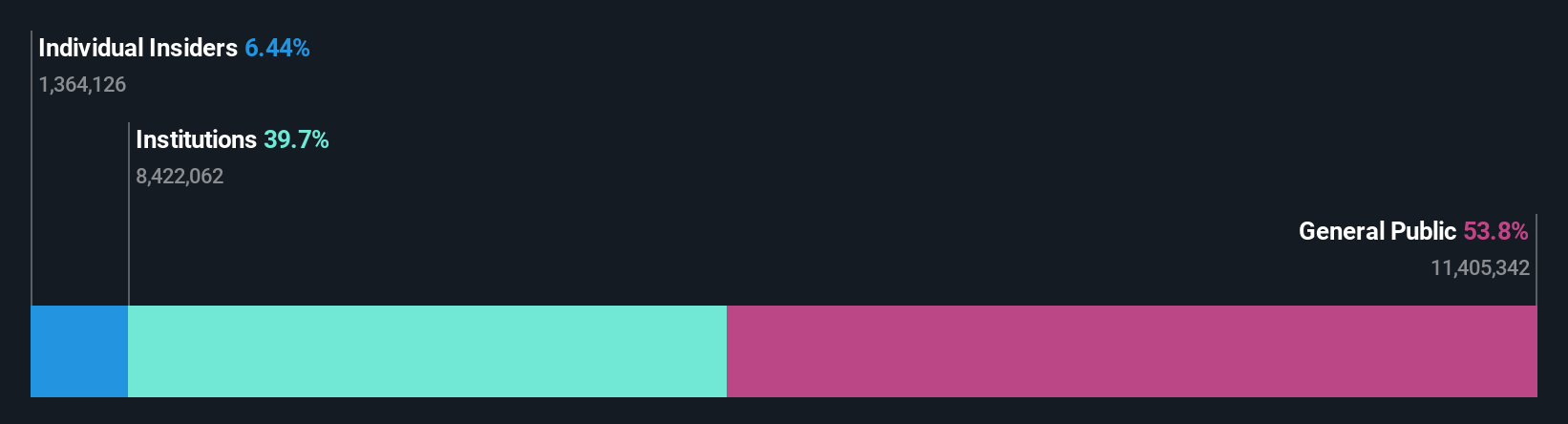
Every investor in Constellation Software Inc. (TSE:CSU) should be aware of the most powerful shareholder groups. We can see that retail investors own the lion's share in the company with 54% ownership. In other words, the group stands to gain the most (or lose the most) from their investment into the company.
And institutions on the other hand have a 40% ownership in the company. Institutions will often hold stock in bigger companies, and we expect to see insiders owning a noticeable percentage of the smaller ones.
In the chart below, we zoom in on the different ownership groups of Constellation Software.
See our latest analysis for Constellation Software
What Does The Institutional Ownership Tell Us About Constellation Software?
Many institutions measure their performance against an index that approximates the local market. So they usually pay more attention to companies that are included in major indices.
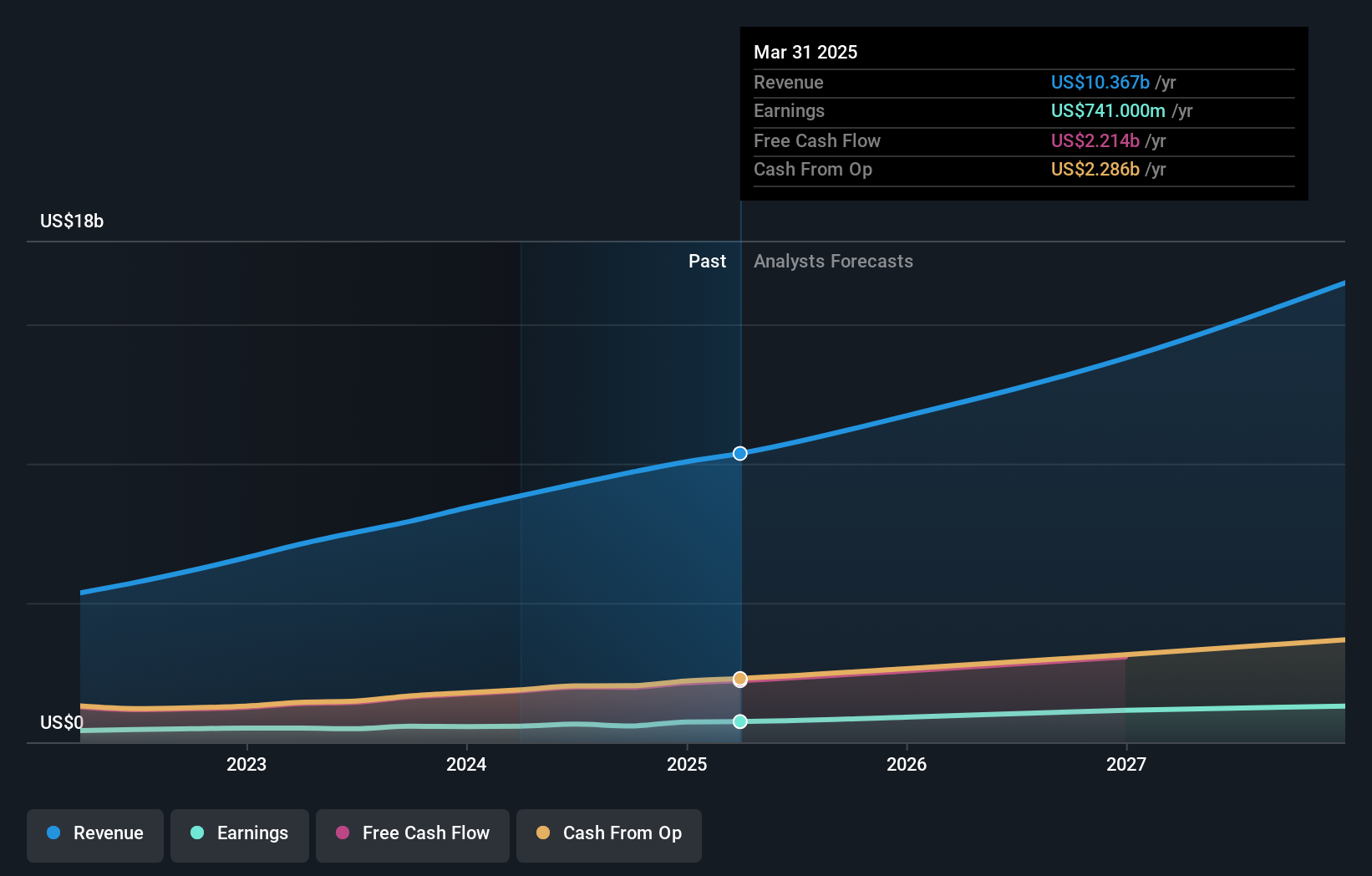
We can see that Constellation Software does have institutional investors; and they hold a good portion of the company's stock. This can indicate that the company has a certain degree of credibility in the investment community. However, it is best to be wary of relying on the supposed validation that comes with institutional investors. They too, get it wrong sometimes. When multiple institutions own a stock, there's always a risk that they are in a 'crowded trade'. When such a trade goes wrong, multiple parties may compete to sell stock fast. This risk is higher in a company without a history of growth. You can see Constellation Software's historic earnings and revenue below, but keep in mind there's always more to the story.
Constellation Software is not owned by hedge funds. Looking at our data, we can see that the largest shareholder is FMR LLC with 4.8% of shares outstanding. With 3.8% and 3.3% of the shares outstanding respectively, The Vanguard Group, Inc. and Capital Research and Management Company are the second and third largest shareholders. Additionally, the company's CEO Mark Leonard directly holds 1.9% of the total shares outstanding.
Our studies suggest that the top 25 shareholders collectively control less than half of the company's shares, meaning that the company's shares are widely disseminated and there is no dominant shareholder.
While studying institutional ownership for a company can add value to your research, it is also a good practice to research analyst recommendations to get a deeper understand of a stock's expected performance. Quite a few analysts cover the stock, so you could look into forecast growth quite easily.
Insider Ownership Of Constellation Software
The definition of company insiders can be subjective and does vary between jurisdictions. Our data reflects individual insiders, capturing board members at the very least. Management ultimately answers to the board. However, it is not uncommon for managers to be executive board members, especially if they are a founder or the CEO.
Insider ownership is positive when it signals leadership are thinking like the true owners of the company. However, high insider ownership can also give immense power to a small group within the company. This can be negative in some circumstances.
Shareholders would probably be interested to learn that insiders own shares in Constellation Software Inc.. The insiders have a meaningful stake worth CA$6.6b. It is good to see this level of investment. You can check here to see if those insiders have been buying recently.
General Public Ownership
The general public -- including retail investors -- own 54% of Constellation Software. With this amount of ownership, retail investors can collectively play a role in decisions that affect shareholder returns, such as dividend policies and the appointment of directors. They can also exercise the power to vote on acquisitions or mergers that may not improve profitability.
Next Steps:
While it is well worth considering the different groups that own a company, there are other factors that are even more important. Be aware that Constellation Software is showing 1 warning sign in our investment analysis , you should know about...
Ultimately the future is most important. You can access this free report on analyst forecasts for the company.
NB: Figures in this article are calculated using data from the last twelve months, which refer to the 12-month period ending on the last date of the month the financial statement is dated. This may not be consistent with full year annual report figures.
New: AI Stock Screener & Alerts
Our new AI Stock Screener scans the market every day to uncover opportunities.
• Dividend Powerhouses (3%+ Yield)
• Undervalued Small Caps with Insider Buying
• High growth Tech and AI Companies
Or build your own from over 50 metrics.
Have feedback on this article? Concerned about the content? Get in touch with us directly. Alternatively, email editorial-team (at) simplywallst.com.
This article by Simply Wall St is general in nature. We provide commentary based on historical data and analyst forecasts only using an unbiased methodology and our articles are not intended to be financial advice. It does not constitute a recommendation to buy or sell any stock, and does not take account of your objectives, or your financial situation. We aim to bring you long-term focused analysis driven by fundamental data. Note that our analysis may not factor in the latest price-sensitive company announcements or qualitative material. Simply Wall St has no position in any stocks mentioned.
MI

The Foxhole
Berkshire sold Visa and Mastercard. Ackman just bought both. So whose "smart money" are you actually following?
126
 Andrew Legget
Market Insights
Great earnings season, but are the earnings real?

At first glance, this was the strongest earnings season in years. But when you look at where the growth actually came from, the story splits into two very different pictures.
85
About TSX:CSU
Constellation Software
Acquires, builds, and manages vertical market software businesses to develop mission-critical software solutions for public and private sector markets.
Solid track record and good value.
Similar Companies
Market Insights


Advertisement
Weekly Picks
LO


Lou_Basenese on Oncolytics Biotech ·
The Team Behind a $2 Billion Johnson & Johnson (JNJ) Deal Just Took Over This $105 Million Cancer Biotech
Fair Value:US$3.576.1% undervalued
44 followersusers have followed this narrative
0 commentsusers have commented on this narrative
12 likesusers have liked this narrative
AN


andrei9868 on ServiceNow ·
The Platform Turning Enterprise Chaos into Autonomous Workflows
Fair Value:US$17012.9% undervalued
11 followersusers have followed this narrative
2 commentsusers have commented on this narrative
2 likesusers have liked this narrative
JO


John_Eric on Vistra ·
Vistra Fell 38%. Adjusted EBITDA Rose 31%. Here's the $472 Million Reason They Disagree.
Fair Value:US$291.8752.9% undervalued
6 followersusers have followed this narrative
0 commentsusers have commented on this narrative
4 likesusers have liked this narrative
HA


HarishPK on EverQuote ·
EverQuote and an Asymmetric Investment Opportunity
Fair Value:US$36.0929.5% undervalued
4 followersusers have followed this narrative
1 commentusers have commented on this narrative
2 likesusers have liked this narrative
Recently Updated Narratives
WO


Womble on Xylem ·
Xylem's Profit Margins Are Projected to Grow Over 11% in Coming Years
Fair Value:US$15529.0% undervalued
1 followerusers have followed this narrative
0 commentsusers have commented on this narrative
0 likesusers have liked this narrative
LU


LunaRodas on Medtronic ·
MDT | Medtronic: What They Said vs. What They Did
Fair Value:US$115.3821.4% undervalued
1 followerusers have followed this narrative
0 commentsusers have commented on this narrative
0 likesusers have liked this narrative
MO

Mohammed_Ahmed_Aleen on Saudi Telecom ·
Could LEAP 2026 Make stc Worth SAR 46.50 Per Share?
Fair Value:ر.س46.494.6% undervalued
1 followerusers have followed this narrative
0 commentsusers have commented on this narrative
0 likesusers have liked this narrative
Popular Narratives
OS


oscargarcia on NVIDIA ·
The company that went from selling GPUs to gamers to becoming the AI arms dealer of the 21st century.
Fair Value:US$28021.2% undervalued
372 followersusers have followed this narrative
9 commentsusers have commented on this narrative
17 likesusers have liked this narrative
JO

John_Eric on MercadoLibre ·
MercadoLibre and the Spreadsheet Trick That Decides Everything
Fair Value:US$7.31k73.5% undervalued
128 followersusers have followed this narrative
3 commentsusers have commented on this narrative
18 likesusers have liked this narrative
CU

CubanEros on Microsoft ·
A wonderful business at reasonable price.
Fair Value:US$419.9120.8% overvalued
217 followersusers have followed this narrative
0 commentsusers have commented on this narrative
9 likesusers have liked this narrative


