
Advertisement
- United Kingdom
- /
- Oil and Gas
- /
- AIM:ORCP
We're A Little Worried About Oracle Power's (LON:ORCP) Cash Burn Rate
Just because a business does not make any money, does not mean that the stock will go down. For example, although Amazon.com made losses for many years after listing, if you had bought and held the shares since 1999, you would have made a fortune. Nonetheless, only a fool would ignore the risk that a loss making company burns through its cash too quickly.
So should Oracle Power (LON:ORCP) shareholders be worried about its cash burn? In this report, we will consider the company's annual negative free cash flow, henceforth referring to it as the 'cash burn'. We'll start by comparing its cash burn with its cash reserves in order to calculate its cash runway.
Check out our latest analysis for Oracle Power
How Long Is Oracle Power's Cash Runway?
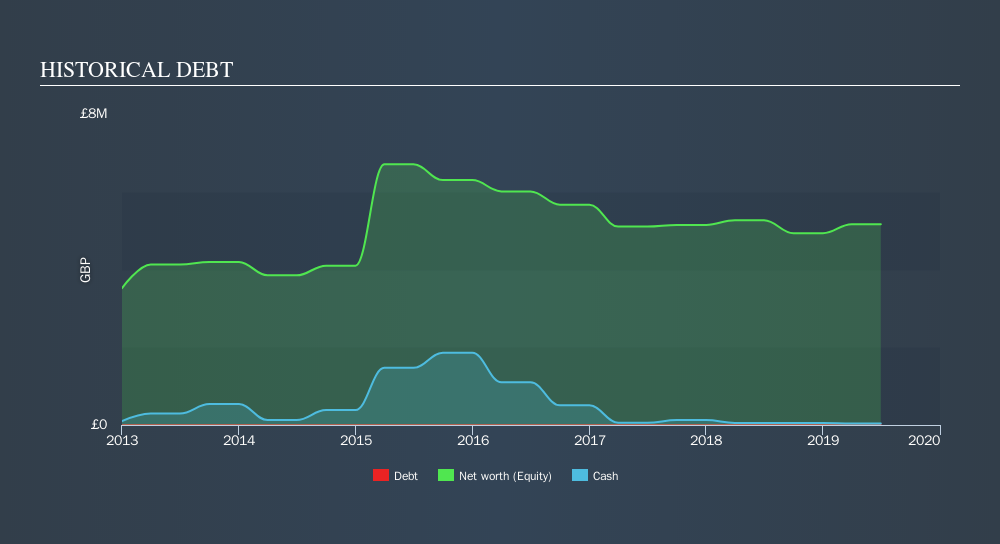
You can calculate a company's cash runway by dividing the amount of cash it has by the rate at which it is spending that cash. When Oracle Power last reported its balance sheet in June 2019, it had zero debt and cash worth UK£37k. In the last year, its cash burn was UK£852k. Therefore, from June 2019 it seems to us it had less than two months of cash runway. It's extremely surprising to us that the company has allowed its cash runway to get that short! Depicted below, you can see how its cash holdings have changed over time.
How Is Oracle Power's Cash Burn Changing Over Time?
Because Oracle Power isn't currently generating revenue, we consider it an early-stage business. Nonetheless, we can still examine its cash burn trajectory as part of our assessment of its cash burn situation. Given the length of the cash runway, we'd interpret the 32% reduction in cash burn, in twelve months, as prudent if not necessary for capital preservation. Admittedly, we're a bit cautious of Oracle Power due to its lack of significant operating revenues. We prefer most of the stocks on this list of stocks that analysts expect to grow.
Can Oracle Power Raise More Cash Easily?
Even though it has reduced its cash burn recently, shareholders should still consider how easy it would be for Oracle Power to raise more cash in the future. Issuing new shares, or taking on debt, are the most common ways for a listed company to raise more money for its business. One of the main advantages held by publicly listed companies is that they can sell shares to investors to raise cash to fund growth. We can compare a company's cash burn to its market capitalisation to get a sense for how many new shares a company would have to issue to fund one year's operations.
Oracle Power's cash burn of UK£852k is about 23% of its UK£3.7m market capitalisation. That's not insignificant, and if the company had to sell enough shares to fund another year's growth at the current share price, you'd likely witness fairly costly dilution.
How Risky Is Oracle Power's Cash Burn Situation?
Even though its cash runway makes us a little nervous, we are compelled to mention that we thought Oracle Power's cash burn reduction was relatively promising. After considering the data discussed in this article, we don't have a lot of confidence that its cash burn rate is prudent, as it seems like it might need more cash soon. When you don't have traditional metrics like earnings per share and free cash flow to value a company, many are extra motivated to consider qualitative factors such as whether insiders are buying or selling shares. Please Note: Oracle Power insiders have been trading shares, according to our data. Click here to check whether insiders have been buying or selling.
Of course Oracle Power may not be the best stock to buy. So you may wish to see this free collection of companies boasting high return on equity, or this list of stocks that insiders are buying.
We aim to bring you long-term focused research analysis driven by fundamental data. Note that our analysis may not factor in the latest price-sensitive company announcements or qualitative material.
If you spot an error that warrants correction, please contact the editor at editorial-team@simplywallst.com. This article by Simply Wall St is general in nature. It does not constitute a recommendation to buy or sell any stock, and does not take account of your objectives, or your financial situation. Simply Wall St has no position in the stocks mentioned. Thank you for reading.
MI

The Foxhole
Google (GOOG) just paid US$10 million for a dead airline's emails. I think some companies are sitting on undervalued data goldmines, just waiting to strike a deal. But which can monetize it without going broke?
810
PO
PowerLaw
Reddit is re-evaluating it's play here. It is worth watching. The consumers of data can also become competitors. It's a much bigger threat.
JA
jake_vw4g3
It only matters to a business if it can become a recurrent revenue stream. Mostly one off sales don't go anywhere.
About AIM:ORCP
Oracle Power
Engages in the exploration and development of coal in Pakistan.
Flawless balance sheet with low risk.
Market Insights


Advertisement
Weekly Picks
RI


Rick_Orford on Starfighters Space ·
The 1960s Fighter Jet That Could Crack Open a $20 Billion Satellite Market
Fair Value:US$520.6% undervalued
48 followersusers have followed this narrative
2 commentsusers have commented on this narrative
7 likesusers have liked this narrative
JO


John_Eric on MercadoLibre ·
MercadoLibre and the Spreadsheet Trick That Decides Everything
Fair Value:US$7.31k75.7% undervalued
82 followersusers have followed this narrative
2 commentsusers have commented on this narrative
12 likesusers have liked this narrative
RC

rcb9 on PayPal Holdings ·
Ten Percent More Volume, One Percent More Transaction Margin
Fair Value:US$70.8914.8% undervalued
11 followersusers have followed this narrative
1 commentusers have commented on this narrative
4 likesusers have liked this narrative
HE


HedgeY on Micron Technology ·
Micron - The Memory Bottleneck Behind the AI Supercycle
Fair Value:US$1.25k24.7% undervalued
25 followersusers have followed this narrative
0 commentsusers have commented on this narrative
6 likesusers have liked this narrative
Recently Updated Narratives
LU


LunaRodas on Jack Henry & Associates ·
JKHY | Jack Henry: What They Said vs. What They Did
Fair Value:US$163.696.5% undervalued
1 followerusers have followed this narrative
0 commentsusers have commented on this narrative
0 likesusers have liked this narrative
DA

david_1211213 on Lotus Technology ·
When History and Modern Collide, The Possibilities Expand for Lotus Technology Inc. (LOT)
Fair Value:US$4.577.1% undervalued
1 followerusers have followed this narrative
3 commentsusers have commented on this narrative
0 likesusers have liked this narrative
DI


divine_4y1uv on AirAsia Group Berhad ·
GTA Holdings: An Aviation MRO Specialist With Earnings Momentum and Multiple Growth Catalysts
Fair Value:RM 1.539.0% undervalued
1 followerusers have followed this narrative
0 commentsusers have commented on this narrative
0 likesusers have liked this narrative
Popular Narratives
OS


oscargarcia on NVIDIA ·
The company that went from selling GPUs to gamers to becoming the AI arms dealer of the 21st century.
Fair Value:US$28021.5% undervalued
325 followersusers have followed this narrative
9 commentsusers have commented on this narrative
16 likesusers have liked this narrative
CU

CubanEros on Microsoft ·
A wonderful business at reasonable price.
Fair Value:US$419.9114.7% overvalued
180 followersusers have followed this narrative
0 commentsusers have commented on this narrative
9 likesusers have liked this narrative
KI

KiwiInvest on Amazon.com ·
Amazon's high growth, high tech segments propel its profits, while traditional segments plod along
Fair Value:US$475.0945.4% undervalued
204 followersusers have followed this narrative
1 commentusers have commented on this narrative
8 likesusers have liked this narrative
Trending Discussion
JA
james_rxfd8 on Starfighters Space ·
How is this different to Virgin Orbit, which didn’t seem to work out, with a very similar plan?
4
|2
ON
Ontological on Lotus Technology ·
This will broaden the Lotus reach; new customers, new assets, new growth
0
|0