Advertisement
- United States
- /
- Software
- /
- NasdaqGS:MSFT
FTC Scrutiny Tests Microsoft Cloud Bundling And AI Expansion Story

Reviewed by Bailey Pemberton
- The U.S. Federal Trade Commission has expanded its antitrust probe into Microsoft’s cloud, enterprise software, and AI practices, issuing new investigative demands to competitors.
- Regulators are scrutinizing areas such as software bundling, market power in cloud services, and how AI offerings are integrated across Microsoft’s product suite.
- Microsoft (NasdaqGS:MSFT) is accelerating development of its own AI foundation models while also backing third party firms like Anthropic and Mistral.
- These shifts are unfolding as U.S. authorities highlight rising national security and intellectual property risks linked to potential AI tech leakage, including to China.
For investors looking at NasdaqGS:MSFT, this sits at the intersection of cloud, productivity software, and AI, which are central to Microsoft’s business profile. Regulatory attention on bundling and market influence touches familiar products such as cloud infrastructure and enterprise subscriptions, while the push into in house AI models reflects how integral AI has become to its offerings.
These parallel tracks of antitrust scrutiny and AI self reliance may influence how Microsoft prices, packages, and develops its services over time. The additional geopolitical and national security focus also means AI decisions may increasingly be shaped by policy considerations as well as by commercial objectives.
Stay updated on the most important news stories for Microsoft by adding it to your watchlist or portfolio. Alternatively, explore our Community to discover new perspectives on Microsoft.
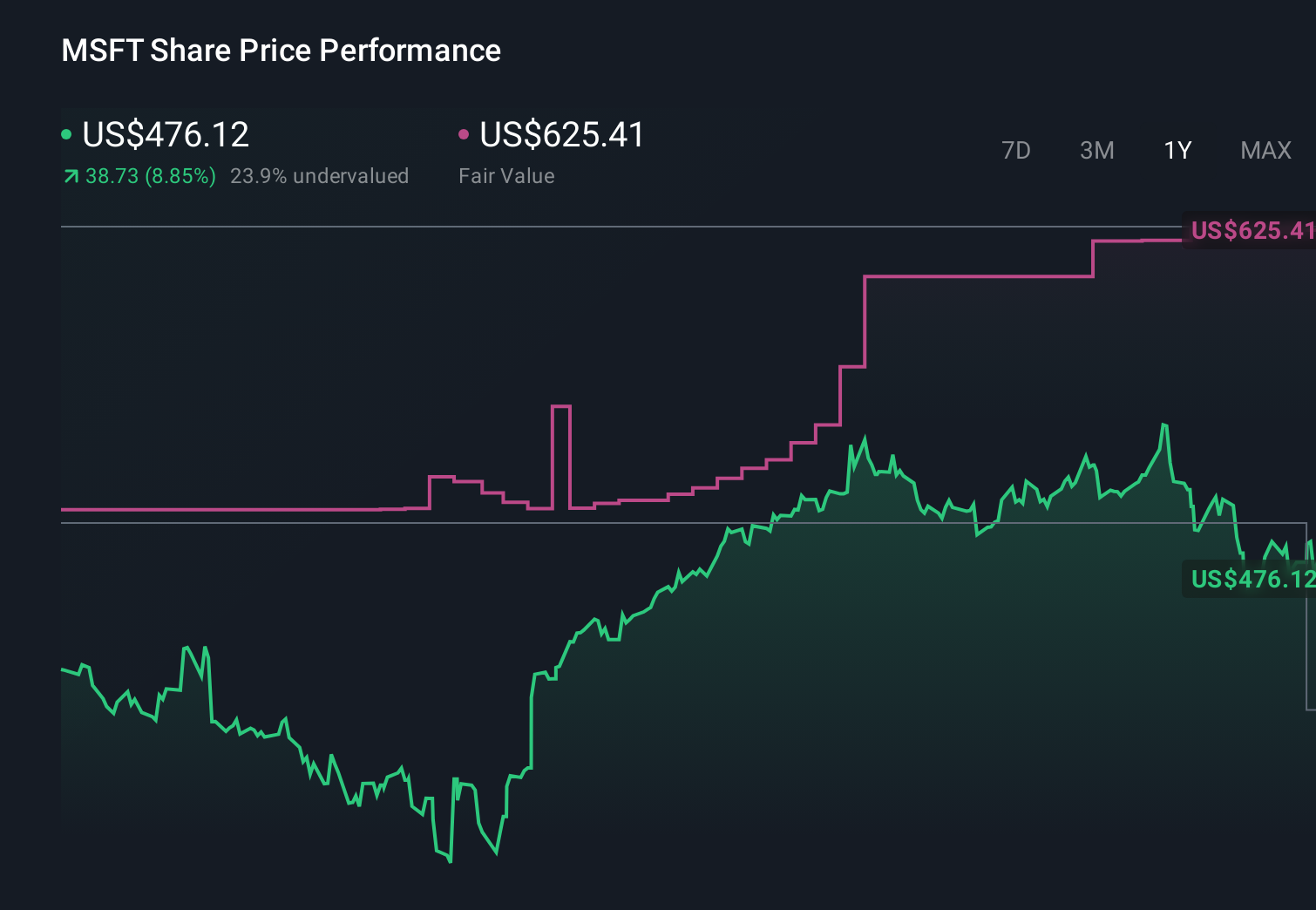
The FTC’s expanded antitrust probe goes straight to how Microsoft structures and sells some of its most important businesses, especially Azure, Microsoft 365, and AI-powered tools such as Copilot. Regulators are asking whether bundling security, AI, and productivity features into all-in-one subscriptions makes it harder for rivals like Amazon, Google, or Salesforce to compete, and whether Microsoft’s control of cloud infrastructure gives it an unfair edge when it backs model providers such as OpenAI, Anthropic, or Mistral. At the same time, U.S. national security concerns around AI tech leakage, including to China, pull Microsoft into a tighter regulatory framework on export controls, data residency, and model access, which can affect how it deploys AI capacity globally and how it structures sovereign-cloud offerings.
How This Fits Into The Microsoft Narrative
- The focus on bundling and cloud market power ties directly to the narrative’s point about Azure and AI integration driving new high margin revenue streams, because those same integrated offerings are what regulators are evaluating for potential market abuse.
- Pressure from the FTC on licensing, packaging, or exclusive AI partnerships could challenge assumptions that Microsoft can keep expanding AI and cloud while holding margins steady, especially given already high capital spending and analyst concerns around capital intensity.
- Heightened geopolitical and national security scrutiny around AI exports and sovereign cloud, which is central to partnerships like Capgemini’s sovereign-cloud work, is not fully captured in the narrative’s discussion of execution and capacity risks.
Knowing what a company is worth starts with understanding its story. Check out one of the top narratives in the Simply Wall St Community for Microsoft to help decide what it's worth to you.
The Risks and Rewards Investors Should Consider
- ⚠️ Extended FTC scrutiny could result in fines, changes to licensing, or limits on bundling that affect the economics of Azure, Microsoft 365, and Copilot, especially as competitors like Amazon, Google, and Oracle push their own cloud and AI stacks.
- ⚠️ Geopolitical and national security concerns around AI exports and data flows increase regulatory complexity and could slow or constrain AI-driven cloud deals in regions that are sensitive to sovereignty and cross border data controls.
- 🎁 The same AI and cloud integration that regulators are reviewing is also what underpins Microsoft’s large remaining performance obligations and partnerships with firms such as OpenAI and Anthropic, which many analysts view as important long term drivers for cloud and software demand.
- 🎁 Microsoft’s work on sovereign cloud and compliance focused offerings with partners like Capgemini may position it to address tougher regulatory expectations and support clients that need tighter controls over data, resilience, and AI workloads.
What To Watch Going Forward
From here, the key things to track are how the FTC probe evolves, whether any formal charges or settlements emerge, and if Microsoft adjusts its pricing or bundling for cloud and AI services in response. Investors can also watch for changes to the structure of AI partnerships, especially with OpenAI, Anthropic, and Mistral, as regulators and lawmakers push on exclusivity, access, and data safeguards. On the geopolitical side, any new rules on AI exports, data-center power usage, or sovereign-cloud requirements in regions such as Europe or Asia could influence where and how quickly Microsoft deploys capital for data centers and GPU capacity.
To ensure you're always in the loop on how the latest news impacts the investment narrative for Microsoft, head to the community page for Microsoft to never miss an update on the top community narratives.
This article by Simply Wall St is general in nature. We provide commentary based on historical data and analyst forecasts only using an unbiased methodology and our articles are not intended to be financial advice. It does not constitute a recommendation to buy or sell any stock, and does not take account of your objectives, or your financial situation. We aim to bring you long-term focused analysis driven by fundamental data. Note that our analysis may not factor in the latest price-sensitive company announcements or qualitative material. Simply Wall St has no position in any stocks mentioned.
New: Manage All Your Stock Portfolios in One Place
We've created the ultimate portfolio companion for stock investors, and it's free.
• Connect an unlimited number of Portfolios and see your total in one currency
• Be alerted to new Warning Signs or Risks via email or mobile
• Track the Fair Value of your stocks
Have feedback on this article? Concerned about the content? Get in touch with us directly. Alternatively, email editorial-team@simplywallst.com
About NasdaqGS:MSFT
Microsoft
Develops and supports software, services, devices, and solutions worldwide.
Very undervalued with outstanding track record and pays a dividend.
Similar Companies
Market Insights


Advertisement
Weekly Picks
LO


Lou_Basenese on Cue Biopharma ·
Cue Biopharma (NASDAQ: CUE): The Scientist Behind Xolair Just Gave Cue a Next-Generation Shot at the Same Multi-Billion-Dollar Market
Fair Value:US$7057.7% undervalued
11 followersusers have followed this narrative
0 commentsusers have commented on this narrative
4 likesusers have liked this narrative
HE


HedgeY on AST SpaceMobile ·
AST SpaceMobile: The Boldest Direct-to-Cell Bet in Public Markets
Fair Value:US$17036.9% undervalued
33 followersusers have followed this narrative
0 commentsusers have commented on this narrative
10 likesusers have liked this narrative
FU

FundamentalFlow on Onto Innovation ·
Onto Innovation: The Advanced Packaging Chokepoint 51.3% undervalued intrinsic discount
Fair Value:US$38027.7% undervalued
24 followersusers have followed this narrative
0 commentsusers have commented on this narrative
6 likesusers have liked this narrative
MA


martinarauz on Nu Holdings ·
Investment Analysis (May 2026)
Fair Value:US$22.7446.7% undervalued
57 followersusers have followed this narrative
0 commentsusers have commented on this narrative
14 likesusers have liked this narrative
Recently Updated Narratives
RO


RockeTeller on NGEx Minerals ·
Lundin-Backed: 10x High-Grade Copper-Gold Discovery + Billion-Pound Resource Anchor
Fair Value:CA$4128.7% undervalued
1 followerusers have followed this narrative
0 commentsusers have commented on this narrative
0 likesusers have liked this narrative
NI


niteco on Broadcom ·
A Capital Allocation Favorite with Structural Importance
Fair Value:US$651.0535.7% undervalued
1 followerusers have followed this narrative
0 commentsusers have commented on this narrative
0 likesusers have liked this narrative
GO

GoranLagea on Nova Ljubljanska Banka d.d ·
Nova Ljubljanska Banka d.d. future looks bright with a profit margin change of 38%
Fair Value:€36038.3% undervalued
9 followersusers have followed this narrative
0 commentsusers have commented on this narrative
0 likesusers have liked this narrative
Popular Narratives
CL


Clive_Thompson on Take-Two Interactive Software ·
Take-Two Interactive: The Calm Before the Storm NASDAQ: TTWO Last Price: $242.41 Date: May 15, 2026
Fair Value:US$276.9721.8% undervalued
56 followersusers have followed this narrative
0 commentsusers have commented on this narrative
14 likesusers have liked this narrative
MA
martinarauz on Nu Holdings ·
Investment Analysis (May 2026)
Fair Value:US$22.7446.7% undervalued
57 followersusers have followed this narrative
0 commentsusers have commented on this narrative
14 likesusers have liked this narrative
NI

niteco on Honeywell International ·
Honeywell - The Demand-Side of the AI Infrastructure
Fair Value:US$320.1932.0% undervalued
47 followersusers have followed this narrative
0 commentsusers have commented on this narrative
19 likesusers have liked this narrative
Trending Discussion

FR

FrontierTom on United States Antimony ·
Great Long term play that needs great tolerance for price swings along the way.
0
|0
